
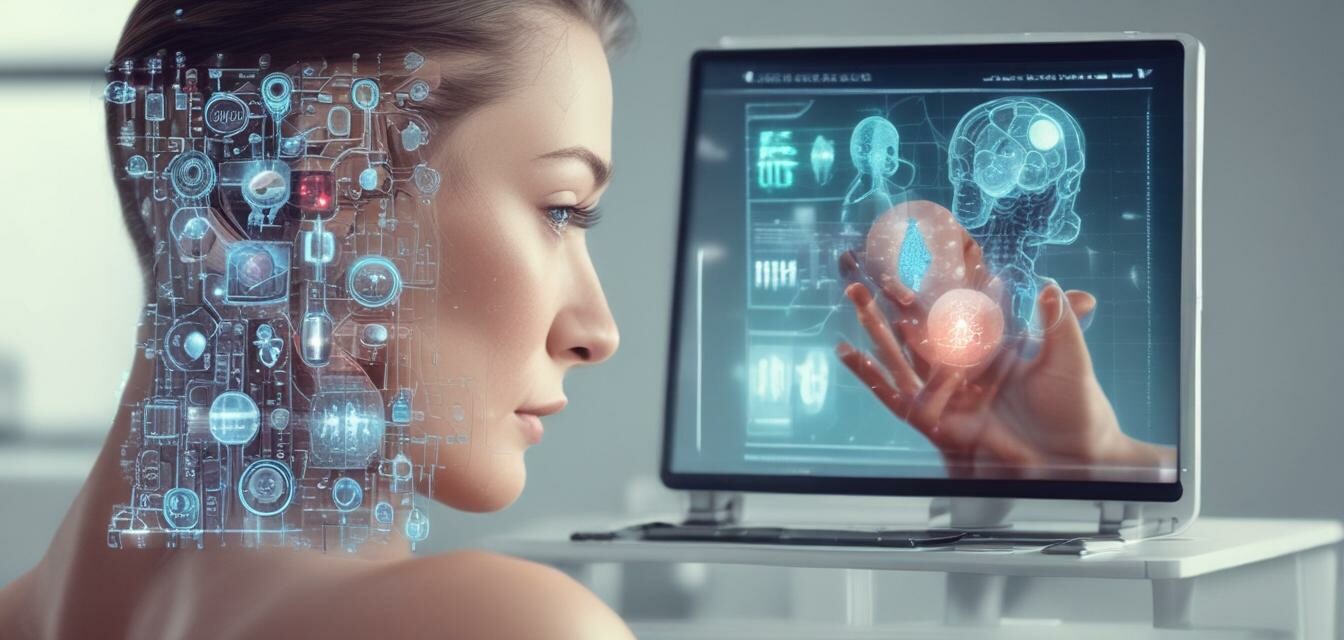
The evolving role of artificial intelligence in dermatology
Key takeaways
- Artificial Intelligence (AI) is revolutionizing dermatological diagnosis and treatment.
- AI enhances diagnostic accuracy and reduces time for skin assessments.
- Machine learning models are being trained to analyze large datasets for better outcomes.
- AI applications in teledermatology are improving patient access to care.
- The integration of AI in dermatology raises new ethical considerations.
Artificial intelligence is becoming increasingly influential in dermatology, enabling healthcare professionals to improve diagnosis, treatment, and overall patient care. It enhances efficiency and outcomes, creating a new frontier in skin health management. In this article, we explore how AI is reshaping the dermatology landscape, the benefits it offers, and the challenges it presents.
The impact of AI in dermatological diagnosis
The application of AI in dermatology primarily focuses on its role in diagnostics. Here are several ways AI enhances the identification of skin conditions:
- Image recognition: AI algorithms can analyze and interpret medical images, identifying a range of dermatological conditions with impressive accuracy. This includes the early detection of skin cancer.
- Pattern analysis: Machine learning models can learn from vast datasets of skin images, recognizing subtle patterns that may be missed by the human eye.
- Risk assessment: AI tools can help assess individual risk levels for developing certain skin diseases based on historical and demographic data.
How AI algorithms work
AI algorithms use several methods to improve diagnostic processes in dermatology:
| Method | Description | Application in Dermatology |
|---|---|---|
| Convolutional Neural Networks (CNNs) | A type of deep learning model that processes data with grid-like topology. | Used for analyzing images of skin lesions. |
| Support Vector Machines (SVM) | Classifies data by finding the optimal hyperplane. | Utilized for differentiating benign from malignant lesions. |
| Random Forests | An ensemble learning method using multiple decision trees. | Effective in categorizing skin conditions based on features. |
Improving Treatment with AI
Beyond diagnosis, AI is also transforming treatment approaches in dermatology. Here’s how:
- Personalized therapy: AI can help design customized treatment plans based on individual patient data.
- Predictive analytics: AI systems can forecast treatment outcomes, allowing dermatologists to make informed decisions.
- Remote monitoring: AI-powered applications can track skin conditions over time, alerting patients and doctors to any concerning changes.
Real-world applications of AI in treatment
Here are some notable AI applications currently being employed in dermatological treatment:
| AI Application | Purpose | Benefits |
|---|---|---|
| Teledermatology | Remote consultations using AI for quick assessments. | Increases accessibility for patients, especially in rural areas. |
| Chatbot consultations | AI-driven chatbots provide preliminary evaluations. | Reduces workload and streamlines appointment scheduling. |
| AI Skin Analyzers | Mobile tools that assess skin conditions from photos. | Convenient for patients to monitor their skin health at home. |
Ethical and practical considerations
As AI continues to evolve, several ethical and practical considerations need to be addressed:
- Data privacy: Ensuring patient data is handled responsibly and securely is crucial.
- Bias in data: AI systems trained on incomplete or biased datasets may produce skewed results.
- Regulatory frameworks: There is a need for comprehensive guidelines governing AI applications in healthcare.
Training and accountability
It is essential that healthcare professionals using AI tools are adequately trained and aware of their limitations. Ongoing education and assessment of AI platforms are necessary to ensure safe and effective usage.
Conclusion
The integration of artificial intelligence in dermatology marks a significant advancement in how skin conditions are diagnosed and treated. While there are challenges to navigate, the benefits of improved accuracy, efficiency, and access to care are undeniable. As technology continues to evolve, it will be fascinating to observe how AI shapes the future of dermatology.
Pros
- Enhanced diagnostic accuracy
- Increased patient access to dermatological care
- Personalized treatment plans
- Improved patient monitoring
Cons
- Data privacy issues
- Potential biases in AI decision-making
- Need for regulatory frameworks
- Training and accountability requirements for professionals